


More than 4 million adults in the United Kingdom have tried nicotine pouches, signalling a major shift in british nicotine habits. As these small, tobacco-free sachets appear in shops across the country, many people are curious about what pouch nicotine content actually means. This guide cuts through the confusion, helping you understand strengths, measurements, and the key factors that set these products apart from traditional options.
Table of Contents
- What Pouch Nicotine Content Means
- Variations In Nicotine Strength
- How Pouch Nicotine Is Measured
- Regulatory Nicotine Limits
- Risks And Practical Implications
Key Takeaways
| Point | Details |
|---|---|
| Nicotine Pouch Composition | Nicotine pouches are tobacco-free products containing pharmaceutical-grade nicotine, flavourings, and fillers, designed for oral absorption. |
| Nicotine Strength Variations | Available strengths range from 2 mg to over 25 mg per pouch, categorised into levels to suit varying user preferences and tolerances. |
| Measurement Accuracy | Nicotine content is measured using metrics such as milligrams per pouch, ensuring transparency and informed consumer choices. |
| Regulatory Landscape | The UK lacks enforced nicotine strength limits, but manufacturers commonly adhere to a recommended maximum of 20 mg per pouch for consumer safety. |
What pouch nicotine content means
Nicotine pouches are compact, discrete oral nicotine delivery products that represent an innovative alternative to traditional tobacco consumption. According to ASH Wales, these small white sachets contain pharmaceutical-grade nicotine, flavorings, and fillers, designed to deliver nicotine through oral absorption without involving tobacco leaf.
Nicotine content in these pouches refers to the precise concentration of pharmaceutical nicotine within each sachet, typically ranging from 2mg to 20mg per pouch. Unlike traditional tobacco products, nicotine pouches provide a controlled, measured nicotine experience. COT Food Standards explains that these pouches are designed to be placed between the gum and lip, allowing nicotine absorption directly through the oral mucosa.
Key characteristics of nicotine pouch content include:
- Tobacco-free formulation
- Pharmaceutical-grade nicotine
- Precise nicotine concentration levels
- Controlled release mechanism
- No combustion or smoke production
The absorption mechanism is straightforward: when placed under the upper lip, the pouch releases nicotine through the gum tissues over a period typically ranging from 15 to 60 minutes. This method provides a steady, controlled nicotine delivery without the harmful byproducts associated with traditional smoking methods. SNUS WHITELABEL offers advanced manufacturing techniques that enable precise nicotine content management, ensuring consistent quality and user experience across different product variants.
Variations in nicotine strength
Nicotine pouches offer a diverse range of strength options designed to accommodate different user preferences and nicotine tolerances. According to NicPouch, these strengths typically span from as low as 2 mg to over 25 mg per pouch, providing users with multiple choices for their nicotine consumption.
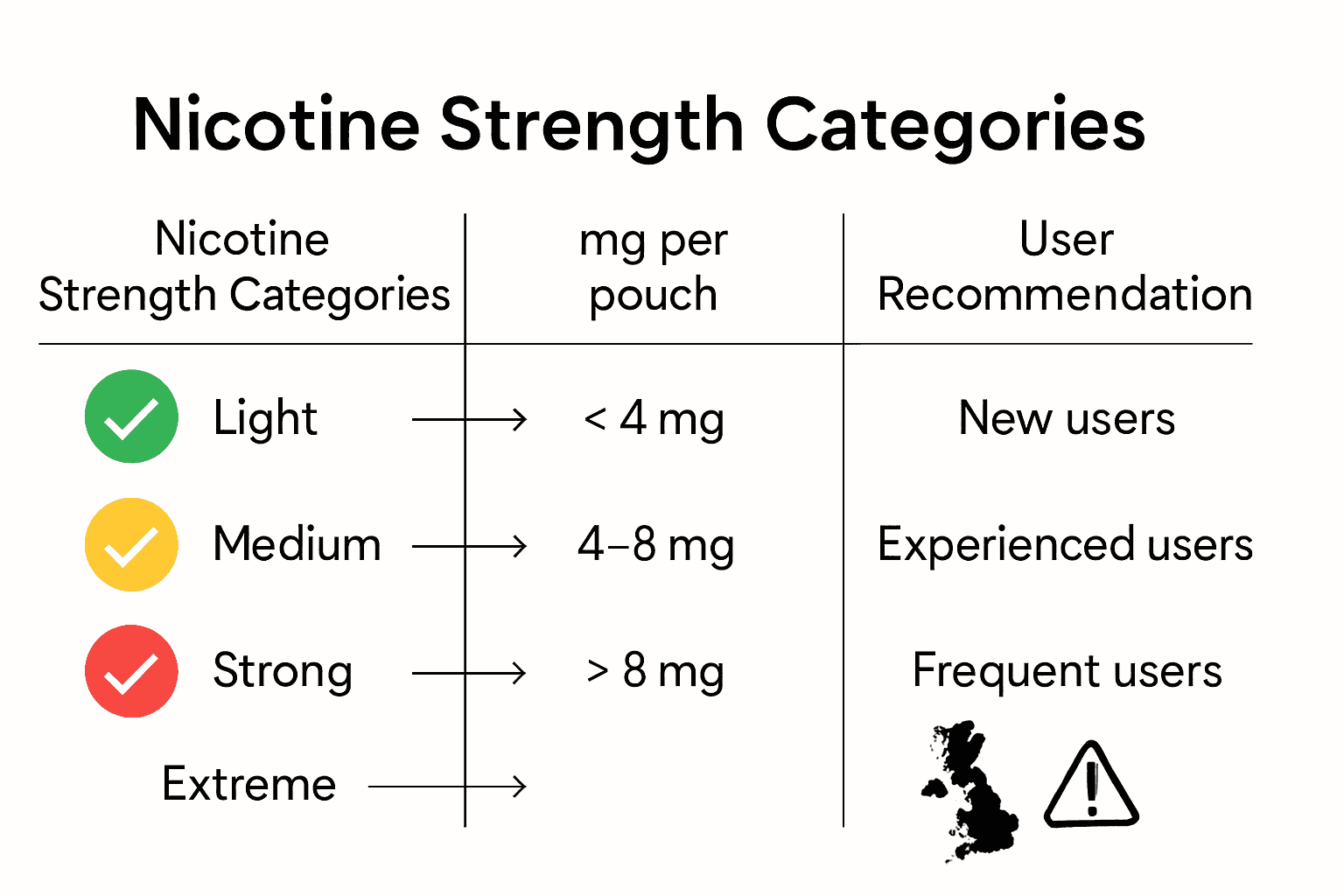
Nicotine strength categories are strategically segmented to support user needs. Haypp categorizes these strengths into three primary levels: Normal (up to 6 mg), Strong (6.1–9 mg), and Extra Strong (9.1–20 mg). This classification helps users select pouches that align with their individual nicotine requirements and experience levels.
Detailed nicotine strength breakdown includes:
- Light: <2 mg
- Mild: 2–4 mg
- Medium: 5–8 mg
- Strong: 9–12 mg
- Extra Strong: 13–18 mg
- Super Strength: 18–25 mg
- Extreme: 25+ mg
Choosing the right nicotine strength is crucial for a satisfactory experience. Factors such as previous nicotine usage, personal tolerance, and desired intensity play significant roles in selection. SNUS WHITELABEL recommends that new users start with lower strengths and gradually progress to higher concentrations as their tolerance develops, ensuring a controlled and comfortable nicotine intake.
How pouch nicotine is measured
Nicotine pouch measurement is a precise scientific process that provides users with clear information about nicotine content. According to Haypp, nicotine strength is quantified using two primary metrics: milligrams per gram (mg/g) and milligrams per pouch (mg/pouch), which offer consumers transparent insight into nicotine concentration.
The mg/pouch measurement is particularly crucial as it directly indicates the actual nicotine content users will consume in a single pouch. Northerner UK explains that this metric allows users to make informed decisions about their nicotine intake, ensuring precise control over consumption levels. Manufacturers carefully calibrate these measurements during production to maintain consistency and accuracy.
Key measurement considerations include:
- Precise laboratory testing
- Standardized measurement protocols
- Consistent nicotine extraction techniques
- Quality control checks
- Regulatory compliance verification
Understanding these measurement techniques is essential for both manufacturers and consumers. SNUS WHITELABEL employs rigorous testing methods to ensure each nicotine pouch meets exact specifications, providing users with reliable and predictable nicotine delivery across different strength levels and product variations.
Regulatory nicotine limits
Navigating the regulatory landscape for nicotine pouches involves understanding the current standards and recommendations in the United Kingdom. According to COT Food Standards, the British Standards Institution recommends a maximum nicotine content of 20 mg per pouch, despite some products in the market containing up to approximately 120 mg of nicotine.
Haypp highlights a critical nuance in the regulatory framework: currently, there is no legally enforced nicotine strength limit for pouches in the UK. However, industry best practices have emerged, with most manufacturers aligning with the Swedish Institute for Standards’ recommendation of a 20 mg per pouch maximum. This self-regulated approach helps maintain product safety and consumer protection in the absence of strict legislative constraints.

Key regulatory considerations include:
- Absence of formal legal nicotine strength limits
- Industry-recommended maximum of 20 mg per pouch
- Voluntary compliance with standards
- Focus on consumer safety
- Ongoing scientific assessment of nicotine delivery
SNUS WHITELABEL recognizes the importance of responsible manufacturing, proactively adhering to recommended guidelines to ensure product safety and maintain consumer trust in the evolving nicotine pouch market.
Risks and practical implications
Understanding the potential risks associated with nicotine pouches is crucial for responsible use. COT Food Standards highlights that nicotine pouches deliver nicotine through the oral mucosa, resulting in systemic absorption where the bioavailability and potential toxicological risks are directly influenced by nicotine content and individual user behavior.
ASH Wales emphasizes the significant concern of addiction, noting that nicotine pouches can lead to nicotine dependence. Their discreet nature particularly raises alarms about potential usage among younger demographics and in public settings where traditional smoking restrictions might not apply. This subtle consumption method presents unique challenges for monitoring and regulating nicotine intake.
Key risk considerations include:
- Potential for nicotine addiction
- Systemic nicotine absorption
- Individual variability in nicotine metabolism
- Limited long-term usage research
- Potential gateway effect for younger users
SNUS WHITELABEL recognizes these potential risks and advocates for responsible manufacturing, transparent communication, and continued research to understand the comprehensive health implications of nicotine pouch consumption.
Master Nicotine Content with Tailored Manufacturing Solutions
Understanding the precise nicotine content in pouches is crucial for creating safe, effective, and market-ready products. This article highlights challenges such as managing strength variations, ensuring regulatory compliance, and delivering consistent nicotine absorption without risking consumer safety. If you are seeking full control over nicotine concentrations and want to build trusted brands that meet industry standards then expert white label manufacturing is your answer.
At SNUS WHITELABEL, we specialise in helping businesses customise nicotine pouches with pharmaceutical-grade nicotine concentrations from mild to extra strong. Our advanced production processes guarantee exact nicotine levels, reliable quality control, and adherence to UK best practices. Whether launching a new brand or scaling your product range, you gain access to complete flexibility in flavour, packaging, and nicotine strength.

Elevate your product offering today by partnering with trusted manufacturers who understand the nuances of nicotine content measurement and regulation. Visit SNUS WHITELABEL now to explore how our white label nicotine pouch manufacturing services can transform your business vision into reality. Let us help you deliver safer, consistent, and consumer-approved nicotine pouches that stand out in the UK market.
Frequently Asked Questions
What does nicotine content mean in nicotine pouches?
Nicotine content refers to the precise concentration of pharmaceutical-grade nicotine in each pouch, typically ranging from 2mg to 20mg. This controlled measurement provides a consistent nicotine experience without the use of tobacco leaf.
How is the nicotine strength in pouches categorized?
Nicotine strengths are usually categorized as follows: Light (<2 mg), Mild (2–4 mg), Medium (5–8 mg), Strong (9–12 mg), Extra Strong (13–18 mg), Super Strength (18–25 mg), and Extreme (25+ mg). This categorisation helps users select pouches based on their individual preferences and tolerance levels.
How is nicotine measured in pouches?
Nicotine is measured using two primary metrics: milligrams per gram (mg/g) and milligrams per pouch (mg/pouch). The mg/pouch measurement indicates the actual nicotine content a user consumes, ensuring informed decisions about nicotine intake.
Are there any regulatory limits on nicotine pouch strength?
Currently, there are no legally enforced limits on nicotine strength for pouches, but industry best practices recommend a maximum of 20 mg per pouch, which most manufacturers comply with to ensure safety and consumer protection.


